Name of Farmers cum Development partners
- Bhupen Kakati (Husband)
- Hirumoni Bhuyan (Wife)
Village: Deusunga
VCDC: Deusunga VCDC
Block: Goreswar
Implementing Agency: DWIMU, Goreswar Block
Area Covered: 0. 16 acre
Crop: Indeterminate type Tomato
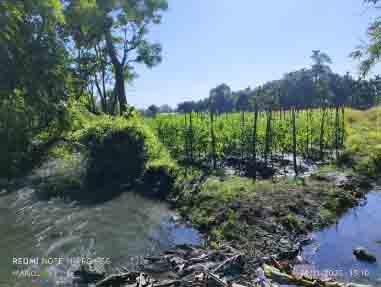
Source of Irrigation: Existing natural Dong system
Background
Deusunga village under Deusunga VCDC of Goreswar Block is characterized by traditional agricultural practices with dependence on monsoon rainfall. Although the village is endowed with a natural dong system (small perennial water channel), its potential for assured irrigation was underutilized due to lack of planning and technical intervention.
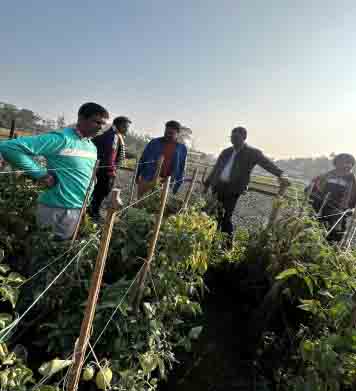
Bhupen Kakati and Hirumoni Bhuyan are small and marginal farmers of the village who were earlier engaged mainly in paddy and seasonal vegetables with low productivity and income. In order to enhance farm income and promote efficient utilization of local water resources, the DWIMU team of Goreswar Block initiated a focused intervention on indeterminate tomato cultivation in a small but manageable area of 0.16 acre.
Objective of the Intervention
Here are five free templates that stand out due to their design and functionality:
- To demonstrate efficient use of existing natural dong irrigation system
- To promote indeterminate type tomato cultivars for higher and prolonged yield
- To enhance productivity and income of smallholder farmers
- To provide continuous technical guidance and critical input support through DWIMU
Pre-Intervention Situation
- Irregular irrigation availability during non-monsoon months
- Use of traditional tomato varieties with short harvesting period
- Limited technical knowledge on staking, pruning, and nutrient management
- Low and unstable income from vegetable cultivation
Intervention Strategy
Utilization of Natural Dong System
- Mapping and channeling of dong water to the selected plot
- Assured irrigation at critical crop growth stages
- Efficient water application without additional pumping cost.
Technical Support by DWIMU Team
- Selection of suitable indeterminate tomato cultivar
- Training on:
o Nursery raising and transplanting
o Proper spacing and plant population
o Staking and pruning techniques
o Integrated Pest and Disease Management (IPDM) - Regular field visits and advisory support
Input Support
- Quality seeds/seedlings of indeterminate tomato
- Bio fertilizers and micronutrients
- Organic plant protection chemicals
- Staking materials (bamboo/poles)
Crop Management Practices
- Land Area: 0.16 acre
- Spacing: Proper row-to-row and plant-to-plant spacing maintained
- Irrigation: Regular and need-based irrigation through dong system
- Nutrient Management: Split application of bio fertilizers as per crop stage
- Plant Support: Staking and pruning done periodically
- Pest & Disease Management: Preventive and need-based control measure
Results and Achievements
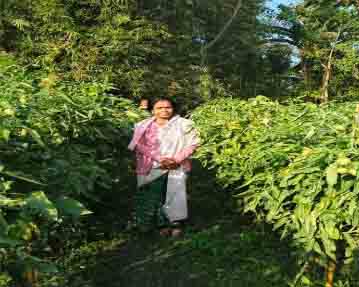
- Healthy crop stand with vigorous vegetative growth
- Continuous flowering and fruiting due to indeterminate nature
- Extended harvesting period of 6–8 weeks
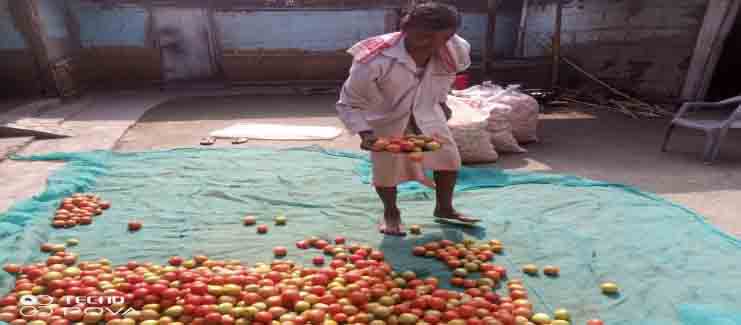
- Improved fruit size, uniformity, and market acceptability
- Reduced crop stress due to assured irrigation
Economic Outcome
- Significant increase in yield compared to traditional tomato cultivation
- Higher net income from a small area of 0.16 acre
- Reduced irrigation cost due to gravity-based dong water use
Cost : Benefit
➢ Total cost (including fixed cost and variable costs) of cultivation (in Rs.) : 25,090
➢ Total production/sale of raw berries: 2377 kg (23.77 Q)
➢ Sale price: Rs. 25-30 per Kg
➢ Gross profit (in Rs.): 62,399
➢ Net profit: Gross profit – Total cost of cultivation
= 62,399- 25090
= Rs. 37,309
Impact on farming community
- Demonstrated the potential of small-scale intensive vegetable cultivation
- Efficient utilization of traditional water resources
- Increased confidence and skill level of farmers
- Created scope for replication among neighboring farmers
- Strengthened farmer–department linkage through continuous DWIMU support
Challenges
- Periodic cleaning of dong channel required
- Increased labor requirement for staking and pruning
Lessons Learnt
- Indeterminate tomato performs best with assured irrigation
- Even small landholdings can generate good income with proper planning
- Continuous technical handholding is crucial for success.
Conclusion
The case of Bhupen Kakati and Hirumoni Bhuyan clearly demonstrates that cultivation of indeterminate tomato varieties in 0.16 acre, supported by natural dong irrigation and continuous technical and input assistance from the DWIMU team of Goreswar Block, can significantly enhance productivity and farm income. This intervention serves as a successful model for sustainable and water-efficient vegetable cultivation in the region.